
"War and Peace" by Leo Tolstoy is a monumental work of literature that chronicles the impact of the Napoleonic era on Tsarist society. The book is both a history of the times and a novel centered on the stories of five Russian aristocratic families. Tolstoy began writing the book in 1863 and took nearly a decade to complete it.
In the early 19th century, the Russian Empire was expanding rapidly and was involved in numerous wars in Europe. The most significant of these was the Napoleonic Wars, which began in 1803 and continued until Napoleon’s defeat in 1815. These wars were a turning point in European history, and they had a profound impact on Russian society. Tolstoy, who had served as an officer in the Crimean War, was deeply affected by the wars and their aftermath.
The novel is set against the backdrop of the Russian aristocracy, a complex and hierarchical society with strict rules and customs. The five families at the center of the story are the Bolkonskys, the Rostovs, the Kuragins, the Bezukhovs, and the Drubetskoys. Each family represents a different aspect of Russian society, from the wealthy landowners to the struggling gentry. The novel follows the lives of these families over the course of several years, from 1805 to 1812.
Tolstoy's novel provides a glimpse into the daily lives of Russian society at the time, and he examines issues like family, love, war, and politics in great detail. He also presents the contrast between the French and Russian societies of the time. The French, who are invading Russia, are depicted as frivolous and self-centered, while the Russians are portrayed as stoic and loyal to their homeland. Tolstoy also explores the nature of war, depicting it as both brutal and wasteful, as well as an opportunity for heroism and self-discovery.
In conclusion, "War and Peace" is an epic masterpiece that provides a unique and insightful perspective on Russian society during the Napoleonic era. Tolstoy's vivid portrayal of the historical events and characters, combined with his keen observations of human nature, has secured the novel's status as a timeless classic of world literature.

"War and Peace" is epic in scope: its plot covers the period from 1805 to 1820, and its narrative is told from the perspectives of various Russian aristocratic families. At the center of the plot is the character Pierre Bezukhov, the illegitimate son of a wealthy count who becomes embroiled in the Napoleonic Wars. The novel opens with the first wave of Russian society coming to terms with the impending threat from Napoleon's France, but Tolstoy's expansive narrative also explores themes of love, family, and masculinity.
The novel's first section is primarily focused on introducing the novel's various characters, who are all members of the complex social strata of their time. We learn about the bitter rivalry between two of the most powerful families in Russia - the Kuragins and the Bolkonskys - and are introduced to young women who are deemed marriageable and ailing patriarchs who are obsessed with legacy.
As the novel progresses, Pierre's experiences in the Battle of Borodino serve as a focal point, as Tolstoy vividly captures the horrific realities of war. The novel's characters respond to these experiences in different ways. For example, the stoic Prince Andrey Bolkonsky, who serves as an officer in the war, begins to question the value of his own life and the lives of those around him. Meanwhile, Pierre emerges from the horrors of war with a newfound clarity of mind and an urge to help others.
After the war, the novel shifts focus to the personal lives and struggles of its cast of characters. Natasha Rostova, a young woman who has been raised by her family with great care, is at the center of several of the novel's romances. She is torn between the charming but dangerous Anatole Kuragin and the steady and dependable Pierre, who saves her from a life of disgrace. Amidst this romantic maneuvering, Tolstoy poses a series of questions about how individuals fit into the larger picture of society, and what role social conventions play in shaping our actions.
Ultimately, "War and Peace" is a complex and multifaceted novel that explores the intricacies of Russian society during the Napoleonic Wars. Its characters are richly drawn and its themes are timeless, making it a masterpiece of world literature that continues to captivate readers to this day.
There are several major themes and motifs that run throughout War and Peace. One of the most prominent themes is the examination of history and the way it impacts individuals and society. Tolstoy was interested in exploring how the Napoleonic era affected the lives of ordinary people, as well as the ruling class. The novel illustrates how war can disrupt and transform society, leading to new political and social structures.
Another central theme in War and Peace is the exploration of love and relationships. The author examines the complexities of romantic love as well as familial relationships, exploring the highs and lows of these connections. The characters in the book face a variety of challenges and obstacles in their pursuit of love, including societal norms and expectations, class differences, and personal insecurities.
One of the most significant motifs in War and Peace is the role of fate in human lives. Throughout the novel, Tolstoy suggests that individuals can exercise free will to a certain extent, but their actions are ultimately shaped by larger forces outside of their control. The author argues that historical events and societal structures play a significant role in shaping individual identity and fate, and that personal decisions are often influenced by these broader cultural and historical contexts.
War and Peace also includes a strong critique of military power and imperialism. Tolstoy was deeply opposed to the glorification of war and conquest, and he used the novel as a platform to express his views on these issues. The novel depicts the devastating effects of war on both individuals and society as a whole, emphasizing the importance of peace and diplomacy in resolving conflicts.
Finally, the novel also explores themes related to spirituality and the search for meaning in life. Tolstoy was deeply interested in questions of morality and ethics, and War and Peace includes a number of characters who are grappling with these issues. The novel suggests that the pursuit of material wealth and power is ultimately unsatisfying, and that individuals must look within themselves to find true happiness and fulfillment.
Leo Tolstoy's "War and Peace" is a monumental work of literature with a distinctive writing style that contributes to its enduring legacy as a classic of world literature. Tolstoy employs a range of literary techniques, including narrative voice, symbolism, and character development, in order to create a rich and complex portrayal of Russian society during the Napoleonic era.
Perhaps most notable is Tolstoy's use of an omniscient narrative voice, which allows him to move easily between different characters and settings. This voice is objective and detached, providing a panoramic view of events that enables readers to understand the larger historical context of the novel. At the same time, Tolstoy also uses a more subjective narrative voice to explore the thoughts and emotions of individual characters, offering readers a glimpse into their inner lives and motivations.
In addition to his use of narrative voice, Tolstoy also employs symbolism to great effect in "War and Peace." For example, the novel is filled with religious imagery that reflects Tolstoy's own spiritual beliefs and provides insight into the characters' ethical and moral struggles. The novel's title itself is symbolic, suggesting that war and peace are two sides of the same coin and that the human experience is characterized by an interplay between conflict and harmony.
Perhaps the most impressive aspect of Tolstoy's writing in "War and Peace," however, is his ability to develop characters who are both vividly realistic and deeply symbolic. Characters such as Pierre Bezukhov, Andrei Bolkonsky, and Natasha Rostova are complex, multi-dimensional figures who embody different aspects of Russian society and the human experience more broadly. Through their stories, Tolstoy explores themes such as love, loss, ambition, and redemption, creating a rich tapestry of human experience that continues to resonate with readers today.
Overall, the literary style and techniques employed in "War and Peace" are integral to the novel's lasting impact on world literature. Tolstoy's ability to create a panoramic view of history while also capturing the inner lives and struggles of individual characters is a remarkable achievement, and one that continues to captivate readers more than a century after the novel's publication.
"War and Peace" has been widely praised as one of the greatest works of literature ever written. Critic Harold Bloom described it as "the best novel ever written" and that it "defines the modern novel". The book has been translated into countless languages and has remained a staple of literature since it was first published in 1869.
Initial critical response to "War and Peace" was mixed. Some critics found fault with its length and complexity, while others praised its scope and ambition. However, over time, as the book's reputation grew, it became widely recognized as a masterpiece of world literature.
In addition to its literary significance, "War and Peace" has had a profound impact on Russian culture and society. Its themes of love, war, and family have resonated with generations of Russians and have been invoked in countless works of art, music, and film. In particular, the character of Pierre Bezukhov, the book's intellectual and spiritual protagonist, has become an enduring symbol of the Russian national spirit.
Throughout the 20th century, "War and Peace" continued to captivate readers and scholars. In the United States, a new translation by Richard Pevear and Larissa Volokhonsky was released in 2007 and received widespread critical acclaim. The book also inspired a 2016 television adaptation, which premiered on BBC One and was praised for its faithful adaptation of the novel's complex plot and characters.
Overall, "War and Peace" remains one of the most important and influential works of literature ever written. Its expansive scope, deep insights into human nature, and rich depiction of Russian society continue to captivate readers and inspire new generations of writers and artists.
"War and Peace" has been adapted into numerous films, TV series, and operas, with various interpretations of the characters and storylines. One of the earliest adaptations was a silent film version directed by Vladimir Gardin in 1915. Since then, there have been several adaptations of the novel, both in Russia and abroad.
One of the most well-known adaptations of "War and Peace" is the Soviet film version made in 1966-67, directed by Sergei Bondarchuk. This epic film, made over a period of seven years, starred Bondarchuk himself as Pierre Bezukhov, alongside a star-studded cast including Lyudmila Savelyeva as Natasha Rostova and Vyacheslav Tikhonov as Andrei Bolkonsky. The film won several Academy Awards, including Best Foreign Language Film and Best Costume Design.
Another notable adaptation is the BBC miniseries made in 2016, starring Lily James as Natasha Rostova, James Norton as Andrei Bolkonsky, and Paul Dano as Pierre Bezukhov. The series was critically acclaimed and received numerous awards and nominations, including a Primetime Emmy for Outstanding Limited Series.
In addition to film and TV adaptations, "War and Peace" has also been adapted into operas, including Sergei Prokofiev's opera of the same name, composed between 1941 and 1952. The opera, which premiered in 1957, received mixed reviews initially but has since become a classic of the operatic canon.
Other notable adaptations of "War and Peace" include the 1956 Hollywood film version directed by King Vidor, starring Audrey Hepburn as Natasha Rostova, and the 2007 French-Italian miniseries starring Clémence Poésy and Alessio Boni.
Overall, the enduring popularity of "War and Peace" has inspired many adaptations in various mediums, each offering a unique perspective on Tolstoy's masterpiece.
Since its initial publication in 1869, "War and Peace" has become one of the most widely read and translated works of literature around the world. The novel's immense popularity and critical acclaim have led to countless editions and translations, with each new version bringing something unique to the table.
The first edition of "War and Peace" was published in serial form in the Russian literary magazine "The Russian Messenger" from 1865 to 1869. This version was later revised and republished in book form in 1873. Since then, the novel has been reprinted countless times and has been the subject of numerous critical editions.
In addition to the original Russian version, "War and Peace" has been translated into dozens of different languages over the years. The first English translation of the novel was published in 1886 by the husband and wife team of Constance Garnett and Edward Garnett. This early translation was criticized for its overly simplistic language and lack of fidelity to the original Russian text.
Subsequent translations of "War and Peace" have sought to address these issues and provide readers with a more accurate and nuanced understanding of Tolstoy's masterpiece. Notable translations include the Constance Garnett translation of 1922, the revised version of the Garnett translation by Ann Dunnigan in 1957, and the 2005 translation by Richard Pevear and Larissa Volokhonsky.
Each of these translations offers a unique perspective on the novel, and each has its own merits and drawbacks. While some readers may prefer the more traditional language of the Garnett translations, others may find the more contemporary language of the Pevear and Volokhonsky translation to be more approachable.
Regardless of which edition or translation a reader chooses, it's clear that "War and Peace" remains an enduring masterpiece of world literature. Its rich characters, sweeping narrative, and insightful commentary on the human condition have captured the imaginations of readers around the world for over a century, and it shows no signs of losing its appeal any time soon.
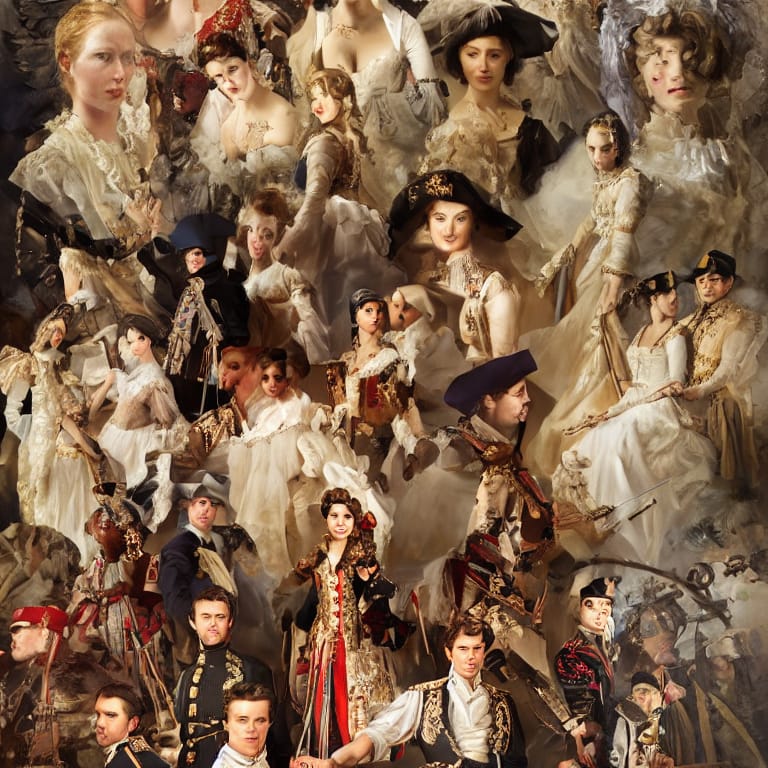
One of the captivating aspects of "War and Peace" is its intricate cast of characters, each with their unique personalities, motives, and flaws. While the novel may center around the five Russian families, Tolstoy's writing delves beyond just those superficial categorizations of individuals. The story's characters come to life under his pen - from the young and innocent Natasha to the cynical and troubled Pierre.
Tolstoy masterfully illustrates the diverse, multidimensional personalities that make up Russian society during the early 1800s. The novel's protagonist, Andrei Bolkonsky, may seem aloof and distant at first, but as the pages turn, we see him as a flawed - yet highly patriotic - man, struggling with his own emotions and beliefs. In contrast, Pierre Bezukhov is a more relatable character, his boisterous nature and optimism endearing him to readers. As the story progresses, we see Pierre's internal turmoil, as his beliefs and personal identity are challenged, eventually leading him to become a leader of the society.
Perhaps the most intriguing character of all, however, is Natasha Rostova. She is a vibrant, brimming with life and energy, providing a stark contrast to the more somber characters. Initially, she is introduced as an innocent maiden, but she evolves over the course of the novel, learning to navigate the complex web of Russian aristocracy that can often veer toward the treacherous. She transforms from a naive young girl into a wiser and more mature woman, showing great inner strength and intelligence.
Moreover, the other secondary characters in the novel, such as the Bolkonsky family members and the ever-resourceful Anna Pavlovna, all contribute to the rich tapestry that Tolstoy has woven. While they may not be as central to the plot as the main characters, they have their stories and interactions, adding depth to the novel.
Through "War and Peace," Tolstoy provides us with an insight into the Russian society, bringing characters to life with his impeccable writing. Whether it's the inner-struggles of characters such as Pierre and Andrei or the lively vigor of Natasha, the characters in this novel showcase the author's mastery of the human psyche. To this day, they remain some of the most complex, relatable, and enduring characters in world literature, and they continue to inspire readers worldwide.
"War and Peace" by Leo Tolstoy is one of the most epic and complex works of literature ever written. The novel deals with a variety of themes, including love, war, religion, and moral philosophy. In this section, we will delve into some of the key passages and quotes in the novel, exploring their significance and how they contribute to Tolstoy's overall message.
One of the most famous passages in "War and Peace" is the scene in which Pierre Bezukhov experiences an epiphany while being held captive by the French. In this scene, he realizes that the things he has been striving for - money, power, and social status - are meaningless. He becomes aware of a higher truth that cannot be found in material possessions. This realization has a profound effect on Pierre, and it is one of the key turning points in the novel. It is also a reflection of Tolstoy's belief in the importance of leading a simple, humble life.
Another memorable quote from the novel is the line "All happy families are alike; each unhappy family is unhappy in its own way." This quote is often cited as a reflection of Tolstoy's view on human nature. He believed that happiness is a universal experience, but that unhappiness is much more varied and complex. This quote also speaks to a larger theme in the novel, which is the idea that every individual has their own unique struggles and challenges to overcome.
One of the most powerful scenes in the novel is the Battle of Borodino, which is described in detail by Tolstoy. This scene is a masterful depiction of the horrors of war, and it underscores the novel's anti-war message. Through his vivid descriptions of the battlefield and the suffering of the soldiers, Tolstoy shows that war is ultimately a destructive and futile endeavor.
Finally, the novel's ending is one of its most famous and controversial features. The final chapter includes a lengthy epilogue, in which Tolstoy reflects on the events of the novel and offers his own interpretations and critiques. There is some debate over whether the epilogue is necessary or whether it detracts from the power of the novel's ending. However, most readers agree that the epilogue is a reflection of Tolstoy's philosophical ideas about life and morality, and that it adds depth and richness to the novel as a whole.
In conclusion, "War and Peace" is a novel that is full of rich passages and insightful quotes. These key moments in the novel contribute to its overall message and themes, and they are a testament to Tolstoy's skill as a writer and philosopher. Whether you are a new reader or a long-time fan of the novel, there is much to appreciate and ponder in these key passages and quotes.

Controversies and debates about Leo Tolstoy's "War and Peace" have existed since the book's publication in 1869. The novel, which explores the impact of the Napoleonic era on Russian society through the stories of five affluent families, has been lauded as a masterpiece of world literature, but not without criticism and controversy.
One recurring point of contention surrounding "War and Peace" is Tolstoy's treatment of history. Despite his meticulous attention to detail in describing the era's battles, he made several deviations from historical accuracy in order to serve his narrative. For example, he embellished some of the events of the Battle of Borodino, the bloodiest battle of the Napoleonic Wars, in order to create a more dramatic story. Critics of the novel argue that Tolstoy's narrative liberties detract from the book's historical value and accuracy, while advocates argue that history serves the story rather than the other way around.
Another controversial element of "War and Peace" is its portrayal of women. While Tolstoy's female characters are complex and central to the novel's plot, they are often relegated to traditional roles, such as caretakers and homemakers. Critics argue that Tolstoy reinforces gender stereotypes, while others argue that he accurately portrays the societal expectations of women in the time period in which the novel is set.
Tolstoy's ideas about power and morality are also a subject of debate. Throughout the novel, characters grapple with questions of personal responsibility, social obligation, and the ethics of war. Critics have argued that Tolstoy's philosophy subverts traditional notions of heroism, sacrifice, and human nature. Some readers and scholars have also taken issue with the novel's moralizing tone, with Tolstoy's characters often delivering lectures on a range of topics from love to politics.
Despite these debates, "War and Peace" remains one of the most widely read and beloved works of world literature. Its scope, depth, and complexity have inspired generations of scholars, writers, and readers. The novel's exploration of the human condition in times of war and peace has made it a touchstone work for understanding the complexities of human nature and the impact of historical events on society.
Leo Tolstoy, born in 1828, was a renowned Russian writer and thinker of the 19th century. He was born into an aristocratic family and received his education at home from private tutors. He later attended the University of Kazan but left without completing his studies. Tolstoy joined the Russian army as an officer and saw action during the Crimean War. He then embarked on extensive travels through Europe and Asia, which influenced his writing greatly. He would go on to write some of the most celebrated novels in world literature, including "War and Peace."
Tolstoy's early work reflects a romantic sensibility, but it was his later works, particularly "War and Peace," that marked a departure from this style. In his later years, Tolstoy became increasingly interested in ethical and philosophical questions, leading to his development of a unique form of Christian anarchist pacifism.
Tolstoy's intellectual influences were varied and included writers, philosophers, and theologians from diverse traditions. He was particularly inspired by the teachings of Jesus Christ, and he sought to apply these principles to all areas of life, including politics and economics. Tolstoy believed that his faith required him to reject violence and to live a simple and ascetic lifestyle. He formed a close relationship with Mahatma Gandhi, who was greatly influenced by Tolstoy's ideas on nonviolent resistance.
In "War and Peace," Tolstoy drew heavily on his own experiences in the military and his extensive reading of historical accounts of Napoleon's invasion of Russia. His novel is an excellent depiction of the social and political climate of Russia during the Napoleonic wars. Through the stories of his five aristocratic families, Tolstoy explores the complexity of human relationships and the difficult choices people face in times of war and peace.
Despite its length, "War and Peace" is a masterpiece of literature that has captivated readers for generations. It is a testament to Tolstoy's genius as both a storyteller and a philosopher.